The order of operations
Wires first. A downed pine that has taken a line with it, or is resting within reach of one, is not a tree problem yet — it is a utility problem, and every tree crew in this county will refuse it until the line is dead. Entergy Arkansas serves the city and its ring; First Electric Cooperative serves most of the Village; the rural west and south are cooperative country; and 911 is always the right call when you cannot tell. Assume a service drop in wet branches is energized, because it usually is.
People and access second. Once the power question is settled, the crew's job is triage: get the wood off anything it is crushing or about to crush, open the driveway or the road out — the only road out, on some of the long drives around Fountain Lake and Royal — and stabilize hung limbs that could finish the job on the next gust. The tidy-up — chipping, hauling, the lawn — waits for daylight rates, and a fair emergency invoice keeps the two separate.
Paper third. If a structure took the hit, an adjuster is now part of your week. Photograph the tree, the damage, and the whole scene together before the first cut. Keep the emergency invoice apart from later work. Whether the policy pays is a question for the policy, not for this page — but a crew that documents as it goes makes the claim easier, and if the storm has also put a house sale or an underwriter's demand in motion, the Garland County deadline-work page picks up from there.
What this county's weather does to trees
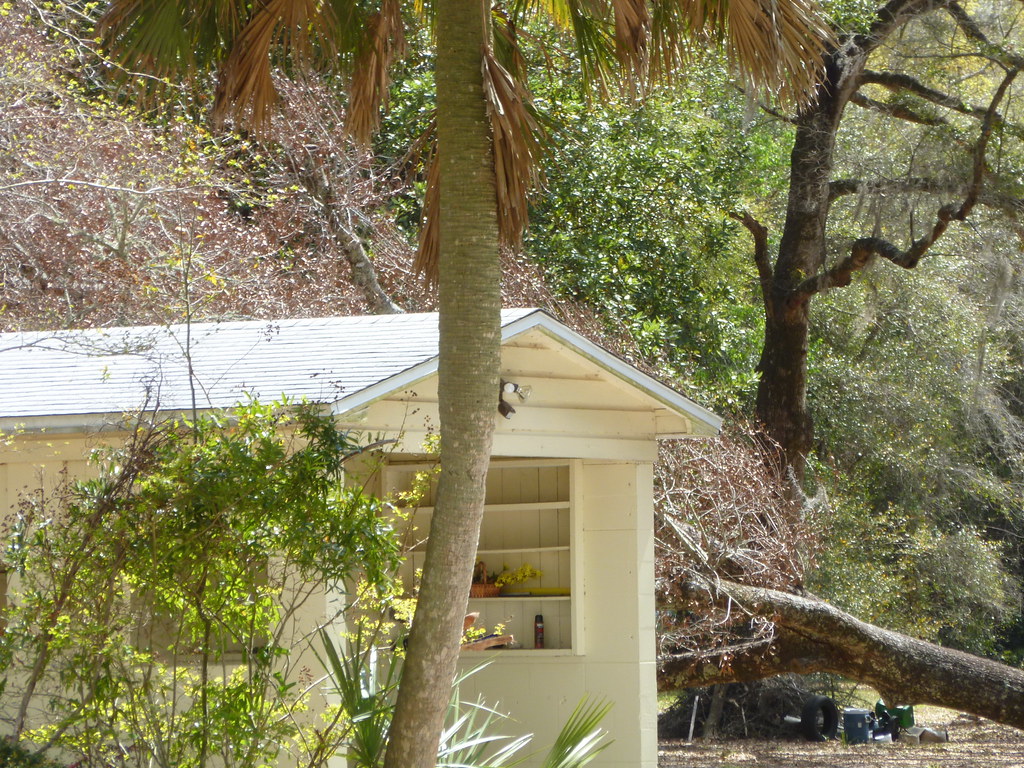
Spring squall lines ride up the Ouachita River valley and find the tall, thin crowns first — pines snap at the top over Mountain Pine, oaks in the Village lose the limb that was already cracked. Summer thunderstorms bring straight-line wind across the open water of Lake Hamilton and Lake Ouachita and push shoreline pines over at the root plate, shallow as their roots are in the rocky fill. Winter ice is the worst of it: a quarter inch on every needle adds weight a pine was never built for, and the ridges around Hot Springs and the Village lose trees in rows. Storm wood is dangerous precisely because it is loaded — a trunk across a roof is a spring, a hung leader is a trap — which is why the people who cut it for a living treat every piece as if it will move.